Open Call: Project Ideas for Green Climate Fund Support in North Macedonia (2025)
The Government of the Republic of North Macedonia represented by the Office of the President of the Government of the Republic of North Macedonia as a National Designated Authority (NDA) for the Green Climate Fund announces an Open call for Submitting Project Ideas that address and respond to the challenge of climate change.
The Open Call aims to target Project Ideas with climate mitigation/adaption potential to be considered on a national level as a first step in the project proposal development process (Project Idea, Concept Note and Full Project Proposal) for submission to the Green Climate Fund (GCF) for financing through grants, loans, equities and guarantees.
Green Climate Fund in Brief
The Green Climate Fund (GCF) is global fund created by the United Nations Framework Convention on Climate Change (UNFCCC) to support the efforts of developing countries to respond to the challenge of climate change (https://www.greenclimate.fund/home). The main principle of the GCF, as a global fund, is to promote a paradigm shift to low-emission and climate-resilient development across countries.
Project idea endorsement
The Project Idea notes should be fulfilled and submitted online to the NDA, via the following link: greendevelopment.mk/IdeaNotes/Index in order to be eligible and subject to the prioritization procedure with the aim to determine the possibility to be included in the GCF Country Programme.
Each Project Idea needs to be in line with the country’s mitigation and adaptation priority sectors/actions defined already in the national strategic documents, as well as with the GCF strategic impact areas.
How to apply?
This call is open for all interested stakeholders. Any legal entity with ideas for climate investments is encouraged to develop a project idea.
Applicants should complete the Project Idea note in English language by using the electronic template accessible on the website greendevelopment.mk, under the Section “Submit Project Idea”.
Before starting to develop their project idea, applicants should register at greendevelopment.mk/IdeaNotes/Index in order to access the ‘’Project Idea notes’’ page.
Deadline for Submission of Project Ideas
Applicants should submit the fully completed Project Idea Note, not later than Monday, 3 November 2025, at 16:00 hrs.
Supporting documents
For guidelines about the GCF, including strategic impact areas, main eligibility and prioritization criteria, how to develop successful Project Ideas and later on Concept Notes and full Project Proposals, please refer to the below documents:
· Open Call for Project Ideas for GCF financial support
· Applicant Guidelines for Developing Project Ideas for the GCF
Skopje, 20 May 2025 – The Green Climate Fund (GCF), the world's largest dedicated climate fund, has approved a new project for North Macedonia under its Readiness and Preparatory Support Programme. The two-year initiative was officially launched today at an event hosted by the Government, bringing together representatives from key national institutions, ministries, academia, and development partners.
This marks North Macedonia's sixth GCF Readiness project and the fourth implemented in partnership with the Food and Agriculture Organization of the United Nations (FAO). The project is led by FAO under the guidance of the Office of the President of the Government, serving as the National Designated Authority (NDA) for the GCF.
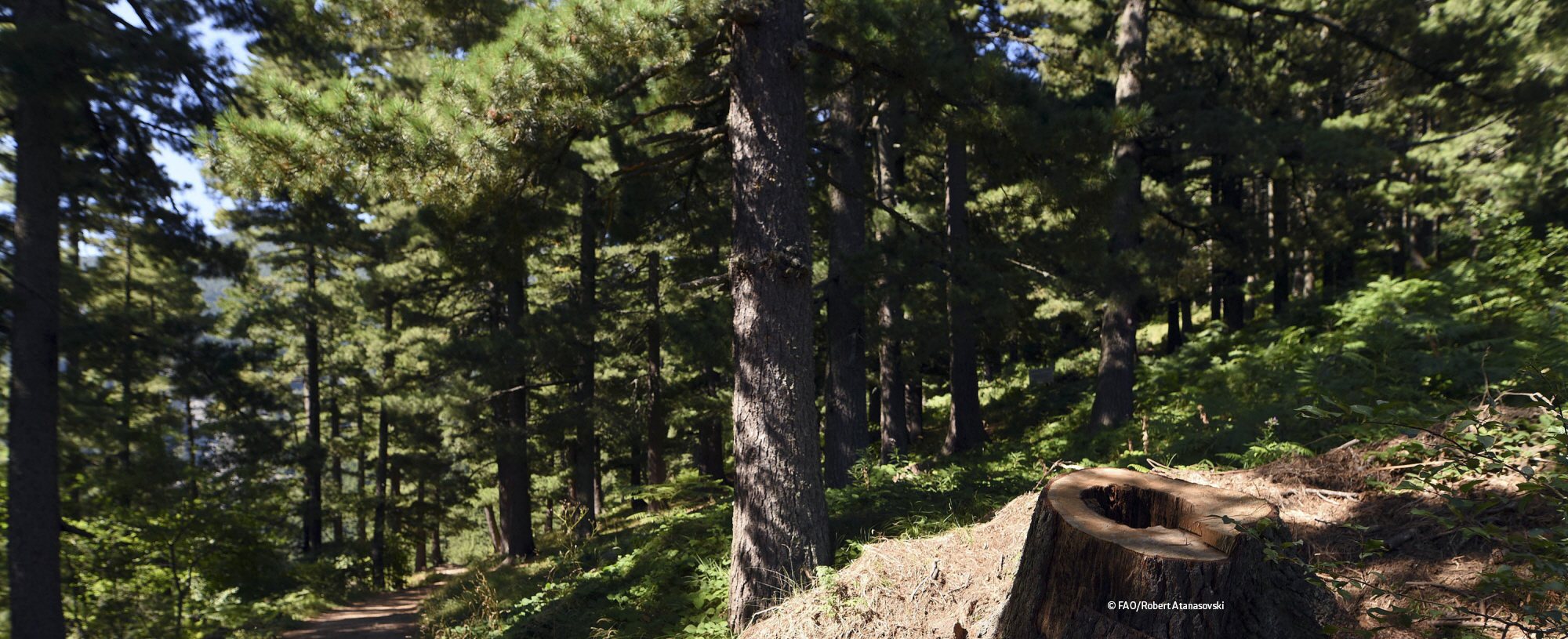
North Macedonia’s forestry sector, historically the country’s primary greenhouse gas (GHG) sink, is increasingly vulnerable to the impacts of climate change. More frequent forest fires, rising temperatures, and land use changes are weakening the sector’s ability to sequester carbon. To reverse this trend, the country’s Enhanced Nationally Determined Contribution (ENDC) sets clear targets to cut emissions in the forestry sector by 2030 through improved fire management and large-scale afforestation.
To help meet these commitments, the new GCF Readiness project will support national decarbonization efforts by strengthening institutional capacities for integrated forest fire management and enhancing the transparency, availability, and use of climate information. These efforts aim to reduce GHG emissions from forests, increase sequestration, and improve the country’s overall climate resilience.
Officially launching the project, Dame Dimitrovski, Advisor to the President of the Government on Environment and Climate and Primary Focal Point for the GCF, said: “North Macedonia is firmly committed to protecting its forests as a cornerstone of sustainable development and climate resilience. This project marks a critical step forward—strengthening our national response to forest fires, advancing low-emission development, and helping us deliver on our commitments under the Paris Agreement.”
“FAO values the trust of the Macedonian Government and is proud to serve as a key GCF partner, supporting the country’s climate priorities through targeted, high-impact interventions’’ said Jeremy Schlickenrieder, FAO Natural Resources Officer and Lead Technical Officer of the project. He emphasized that this project lays a solid foundation for scaling up investment in high-impact projects that make the forestry sector more efficient, sustainable and resilient to climate change. By strengthening national capacities for integrated fire management and enhancing climate data collection and information sharing, it directly supports the reduction of GHG from forests and the achievement of NDC commitments. ‘’Strategic planning will further guide efforts to prevent forest fires and mobilize resources and investments for sustainable, climate-resilient forests”- he added.
Looking ahead, FAO will continue working closely with the Government of North Macedonia and the GCF to build on the readiness efforts and explore opportunities to scale up climate action through the GCF and other partners that help the country meet its adaptation and mitigation priorities across key sectors (including agriculture, forestry and land use).
North Macedonia is increasingly vulnerable to the impacts of climate change, particularly in sectors like agriculture, water resources, and public health. Rising temperatures, prolonged droughts, and more frequent extreme weather events pose significant risks to the country's economic stability and social welfare. These challenges disproportionately affect vulnerable groups, including women, rural communities, and low-income populations, intensifying existing inequalities. The need to strengthen the climate resilience of communities is therefore critical, and addressing both environmental and social dimensions is key to sustainable development.
In response to these growing concerns, the National Designated Authority of the Government of Republic of North Macedonia for coordination of the Green Climate Fund activities in the country, in cooperation with the Deutsche Gesellschaft für Internationale Zusammenarbeit (GIZ) in North Macedonia under the project "Building Capacity Towards Sustainable Human Capital Development", aimed to foster more inclusive and climate-resilient development by integrating gender equality and human capital dimensions into climate action strategies. As part of this project, in the period of October 2023- January 2024, in coordination with the relevant stakeholders and supported by national and international consultants, two essential guidelines have been developed to enhance project design and implementation in alignment with North Macedonia’s climate and development goals.
1. Guideline for Integrating Gender and Human Capital Dimensions in Project Appraisal and Design- This guideline provides a comprehensive framework to ensure that gender and human capital considerations are integrated into all stages of climate-related project appraisal and design. Given the disproportionate impact of climate change on marginalized groups, particularly women, youth, and disadvantage groups, it is crucial that projects account for gender disparities and promote equitable development outcomes.
2. Guideline for Enhancing Climate Rationale of Social Development Projects- This second guideline focuses on strengthening the climate rationale of social development projects, ensuring they are designed to be resilient to climate change impacts. It emphasizes the integration of scientific data, climate projections, and risk assessments into project planning, with a particular focus on gender-sensitive approaches. By addressing both the climate and social dimensions, this guideline supports the development of projects that are not only environmentally sustainable but also socially inclusive, promoting long-term human capital growth in North Macedonia. The guideline is initially developed to support the work of central level institutions such as the ministries in charge of labor market, employment, social policy, gender, and equal opportunities, but it can be utilized by the civil and private sector as well.
These guidelines shall serve as critical resources for policymakers, project designers, and development practitioners working to build a more resilient and equitable future for the Macedonian society. Through the integration of gender-sensitive approaches and a strong climate rationale, these documents are aiming to enhance the country's ability to adapt to climate change while fostering sustainable human capital development.
Links:
From May to September 2024, under the GCF Readiness and Preparatory Support Project, "Building Capacities for Sustainable Development of Human Capital in North Macedonia," established working groups—comprising professionals from national institutions, the civil sector, and the international donor community—collaborated to develop sectoral action plans aimed at addressing climate change challenges. These documents include:
1. Action Plan for Decarbonization of the Health Sector
2. Action Plan for Integrating Education for Sustainable Development and Climate Change Mainstreaming into Primary, Secondary (including VET), Higher, and Adult Education
3. Action Plan to Support the Development of Green, Climate-Smart, Gender-Sensitive, and Inclusive Employment Across Key Economic Sectors
For each of the sectoral documents, a series of productive and collaborative workshops were organized, gathering a wide range of stakeholder representatives from government agencies, civil society, academia, and the private sector. Facilitated by national and international experts, these workshops served as platforms for in-depth discussions, knowledge exchange, and co-creation. Through these sessions, stakeholders worked collectively to design actionable and sector-specific strategies to address climate change challenges within the health, education, labor market, and social policy sectors. This inclusive approach ensured that each action plan reflects the unique needs, perspectives, and expertise of all involved, fostering alignment and commitment to the climate resilience goals for North Macedonia.
1.Action Plan for decarbonization of health sector
The Action Plan for decarbonizing the health sector in North Macedonia centers on reducing greenhouse gas (GHG) emissions and increasing resilience against climate impacts. Key strategies involve energy efficiency, renewable energy integration, climate-resilient healthcare infrastructure, water conservation, sustainable transportation, and waste management enhancements. It aligns with national climate goals, such as the commitment to a 51% GHG reduction by 2030 and 72% by 2050.
To implement these objectives, the document proposes a governance framework led by the Ministry of Health (MoH), with structured roles for institutions like the Institute of Public Health and local governments. Stakeholder engagement is prioritized, encouraging partnerships across government, healthcare providers, and the private sector. Capacity building for healthcare professionals and community education on climate resilience is a focus, alongside targeted measures for vulnerable populations.
Monitoring progress involves Key Performance Indicators (KPIs) for emissions reductions, energy use, and resilience measures, supported by data collection and reporting systems. Financial mobilization strategies emphasize international funds, public-private partnerships, and government budget allocations. A risk management framework addresses potential climate, financial, and operational risks, with emergency preparedness plans for climate-related health crises. Through these actions, the plan aims to align the health sector with sustainable practices while ensuring readiness for climate-related health challenges.
2.Action Plan for integration of the education for sustainable development and climate change mainstreaming into the education in the country.
The action plan for integrating Education for Sustainable Development (ESD) and Climate Change Education (CCE) into country’s education system outlines a comprehensive framework to enhance climate literacy and equip students with green skills across all levels of education. Key objectives include embedding ESD and CCE in curricula, strengthening educator and institutional capacity, and investing in supportive infrastructure. The plan is aligned with national strategies, such as the National Development Strategy 2024-2044, and aims to meet UNESCO’s call for 90% of countries to implement green curricula by 2030.
Implementation involves creating an inter-institutional project team led by the Ministry of Education and Science (MoES) and engaging multiple stakeholders through a quintuple helix approach, ensuring collaboration between government, academia, industry (private sector), and civil society. The plan includes extensive training for teachers and public administration, infrastructure upgrades like green energy systems for schools, and a centralized digital platform for resources within the ministry. Financial support is anticipated from national and international sources, with incentives for private-sector investment in green education infrastructure.
A robust monitoring framework will track progress, and risk management strategies are outlined to address potential institutional, environmental, and general project risks. Overall, the action plan aims to create a sustainable, climate-resilient educational system that empowers North Macedonia’s youth to address global environmental challenges.
3.Action Plan to support the development of green, climate-smart, gender sensitive, and inclusive employment across the key economy sectors.
The Action Plan for North Macedonia focuses on creating a climate-smart, inclusive, and green job market to support sustainable economic growth and meet the country’s climate commitments. Its objectives include promoting green job creation, ensuring social inclusivity, and fostering climate resilience across key sectors like renewable energy, sustainable agriculture, eco-friendly construction, and waste management. The plan aligns with North Macedonia’s Nationally Determined Contributions (NDCs) and the Sustainable Development Goals (SDGs), supporting the country’s ambition to reduce CO₂ emissions.
Key implementation strategies involve capacity building through targeted training programs, updating policies for climate-smart employment, and leveraging partnerships with government agencies, the private sector, and international organizations. A robust stakeholder engagement framework ensures continuous collaboration, with roles defined for ministries, civil society, educational institutions, and private sector representatives.
The Action Plan establishes performance indicators for monitoring outcomes, such as job creation rates, green skills development, and gender inclusivity in the workforce. Financial mobilization strategies aim to secure funding from diverse sources, including the Green Climate Fund (GCF), international financial institutions, and public-private partnerships. Risk management provisions address potential financial and institutional challenges, ensuring flexibility and resource efficiency in achieving a green, resilient, and inclusive labor market for North Macedonia.
Read the Action Plans here:
1_1_Health Sector Action Plan_ENG.pdf
1_2_Health Sector Action plan_ENG.xlsx
2_1_Education Sector Action_Plan_ENG.pdf
2_2_Education Sector Action_Plan_ENG.xlsx
3_1_Employment Sector Action_Plan_ENG.pdf
3_2_Employment Sector Action Plan_ENG.xlsx
The GCF Readiness and Preparatory Support Project "Building capacities for sustainable development of human capital in North Macedonia", started with the development of the climate change-related action documents for the health, education, and labour market and social policy sectors, namely:
- Action Plan for decarbonization of health sector;
- Action Plan for integration of the education for sustainable development and climate change mainstreaming into the primary and secondary (including VET), higher and adult education; and
- Action Plan to support the development of green, climate-smart, gender sensitive, and inclusive employment across the key economy sectors.
In the period June 13-18, three sectoral workshops were organized to initiate the process of developing action plans with all stakeholders based on the sectoral analyses and the existing national strategic documents. The initial findings and recommendations from the analyses in each of the sectors individually, namely the health, education, labour, and social policy sectors, were also presented and consulted with the participants. The action documents should identify the current needs and initiatives for tackling the climate change in each of the target sectors, for each of the designated problems. Representatives of governmental institutions, ministries, relevant agencies, and organizations actively contributed to the success of the workshops. In addition, the discussions were enriched by the participation of representatives of the civil sector and international partners and organizations in the country.
Moving forward, the sectoral analyses will be finalized and published, while the project team along with national and international experts will support relevant institutions and stakeholders in identifying and elaborating initiatives for the action plans. An additional round of consultations will be conducted to finalize these action plans and determine the measures and initiatives related to the aspects of climate change in these three sectors, as well as the potential opportunities for providing financial resources for the implementation of the measures.
Through a series of targeted activities and the development of an Action Plan for the decarbonization of the health sector, the aim is to identify initiatives that will reduce greenhouse gas emissions during the heating, cooling, and maintenance of health facilities nationwide. Additionally, this process will enable exploring opportunities to minimize emissions by improving transport infrastructure and upgrading vehicle fleets within hospitals. As part of this comprehensive approach and process, an identification of measures to reduce emissions from the treatment of medical waste will be performed.
In the education sector, the primary goal is to strengthen capacities at both the central level (within relevant institutions) and the local level (within individual schools of primary and secondary education) to implement the concept of Education for Sustainable Development. The proposed initiatives and measures will facilitate a holistic approach to the learning process, ensuring that students can apply their knowledge practically during their time at school. Moreover, the suggested measures shall also tackle the university level, especially the creation of teaching staff and the education of adults.
The Action plan for the employment, labour, and social policies sector aims to guide strategic and legislative framework stakeholders, as well as the institutions responsible for implementing measures, to support the private sector by stimulating the green jobs creation and training for green skills and climate-smart capacities. This support will focus on achieving a just transition, providing appropriate conditions for retraining and requalification in high-demand occupations aligned with the latest trends in a circular, green, and sustainable economy.
The GCF Readiness and Preparatory Support Project "Building capacities for sustainable development of human capital in North Macedonia" is implemented by the National Designated Authority for the Green Climate Fund in cooperation with the Deutsche Gesellschaft für Internationale Zusammenarbeit (GIZ)
Agenda and presentations: